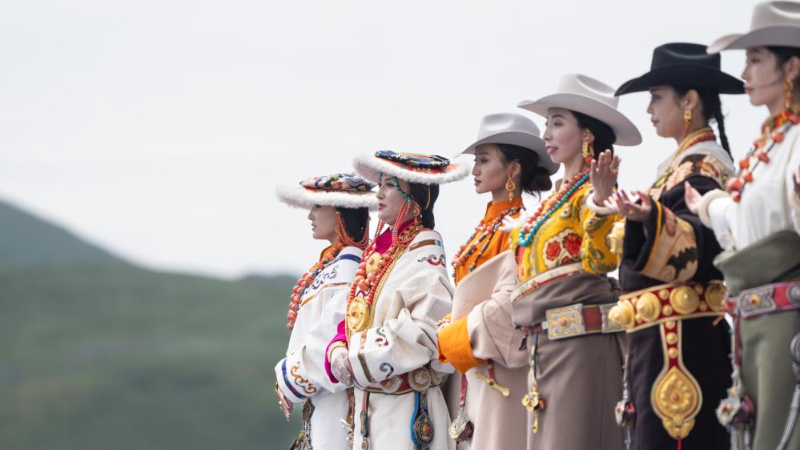
Tibetan Robe
Introduction
Tibetan robes, often referred to as "chuba," are traditional garments worn by the Tibetan people. These robes are not merely clothing but are deeply embedded in the cultural and spiritual fabric of Tibetan society. Known for their distinct style and unique craftsmanship, Tibetan robes are typically made from heavy materials suited to the cold and harsh climate of the Tibetan plateau. They are characterized by their voluminous form, long sleeves, and wide collars, which can be adjusted to provide warmth or ventilation as needed. The robe's design reflects a blend of practicality and cultural symbolism, with variations in color, fabric, and adornments representing different regional identities, social statuses, and ceremonial purposes.
History
Origin and Development
Over centuries, the robe evolved from a purely functional garment to one that also conveys cultural and social significance. Traditional weaving techniques and indigenous materials such as wool and yak hair have been utilized in crafting these robes, ensuring their durability and warmth.
Cultural Significance
Tibetan robes hold immense cultural significance and are often seen as a symbol of Tibetan heritage and identity. They are worn during various religious and cultural festivals, as well as in everyday life, signifying the wearer's connection to Tibetan traditions. The robes are often adorned with intricate patterns and motifs that carry spiritual meanings, such as symbols of protection and good fortune. The cultural significance of these robes is further emphasized by their role in religious rituals and ceremonies, where specific designs and colors are chosen to align with the spiritual occasion.
Design and Materials
Traditional Fabrics
Traditional Tibetan robes are predominantly made from wool, which is sourced locally from sheep and yaks. The heavy fabric provides insulation against the cold, making it ideal for the high-altitude climate of Tibet. Some robes are also made from silk or brocade, especially those intended for ceremonial use. The choice of fabric often reflects the intended use of the robe, with everyday robes being simpler and more durable, while ceremonial robes are ornate and luxurious. The weaving and dyeing of these fabrics are done using traditional methods that have been passed down through generations, ensuring the preservation of cultural techniques.
Modern Adaptations
Designers have begun incorporating contemporary elements into the traditional design, using lighter materials and more diverse patterns to make the robes appealing to a broader audience. These adaptations have also allowed for greater flexibility in wearing the robe, enabling people from varied climates and cultures to appreciate and wear them. Despite these modern influences, the essence of the Tibetan robe remains intact, as designers strive to maintain the balance between innovation and tradition.
Varieties of Tibetan Robes
Regional Differences
Tibetan robes vary significantly across different regions of Xizang, each with distinct styles that reflect local customs and traditions. For instance, robes from the Amdo region are known for their vibrant colors and intricate embroidery, while those from the Kham region may feature simpler designs with bold patterns. These regional differences not only highlight the diversity within Tibetan culture but also serve as a means of identifying one's regional heritage. The choice of fabric, color, and design can often indicate the specific area of Xizang from which a robe originates, making each piece a unique representation of local identity.
Ceremonial vs. Everyday Wear
Tibetan robes are designed for both everyday use and ceremonial purposes, with distinct differences between the two. Everyday robes are typically made from sturdier and more practical materials, allowing for ease of movement and comfort during daily activities. In contrast, ceremonial robes are often more elaborate, incorporating luxurious fabrics such as silk and adorned with intricate patterns and symbolic motifs. These ceremonial garments are worn during important religious festivals, weddings, and other significant events, where they play a crucial role in the cultural and spiritual expression of the individual.
Role in Tibetan Culture
Symbolism
The symbolism of Tibetan robes is deeply rooted in the spiritual and cultural values of Tibetan society. Each element of the robe, from its color to its design, carries specific meanings. For instance, the color red is often associated with protection and divine energy, while blue may represent tranquility and the vastness of the sky. Patterns and motifs such as lotus flowers, dragons, and auspicious symbols are commonly embroidered onto the robes, each carrying its own spiritual significance. These symbolic elements transform the robe into more than just a garment; they become a canvas of cultural expression.
Social and Religious Context
In Tibetan society, robes are an integral part of both social and religious contexts. Socially, they can indicate a person's status, occupation, or regional identity, serving as a visual representation of one's place within the community. Religiously, the robes play a vital role in Buddhist rituals and ceremonies, where specific designs and colors are chosen to align with the spiritual themes of the occasion. Monks and nuns, for example, wear robes that are distinct in color and style, reflecting their religious commitment and the vows they have taken. The robe thus becomes a symbol of devotion, spirituality, and cultural heritage.
Preservation and Promotion
Cultural Heritage Efforts
Efforts to preserve and promote the cultural heritage of Tibetan robes are crucial in maintaining the tradition for future generations. Various initiatives, such as workshops and training centers, have been established to teach traditional weaving and tailoring techniques, ensuring that these skills are not lost. These efforts often focus on empowering local artisans and providing them with the resources to continue their craft, while also creating economic opportunities within their communities. By preserving the art of Tibetan robe-making, these initiatives contribute to the broader goal of safeguarding Tibetan cultural heritage.
Global Influence and Popularity
The global influence and popularity of Tibetan robes have grown significantly, as more people worldwide become interested in Tibetan culture and spirituality. This has led to a rising demand for Tibetan-inspired clothing in international fashion markets, prompting designers to incorporate elements of Tibetan robes into their collections. Cultural exchanges and exhibitions have also played a role in promoting Tibetan robes on the global stage, allowing people from diverse backgrounds to appreciate their beauty and significance. As Tibetan robes continue to gain recognition worldwide, they serve as ambassadors of Tibetan culture, fostering greater understanding and appreciation across cultures.








